
Ghosts? Fine.
Goblins? Manageable.
An outdated employee handbook, misclassified contractor, or unpaid five-minute “favor” after someone clocks out?
Now THAT is terrifying.
Small business owners are often haunted by HR problems they don’t even know exist until the Department of Labor, IRS, or an attorney comes knocking.
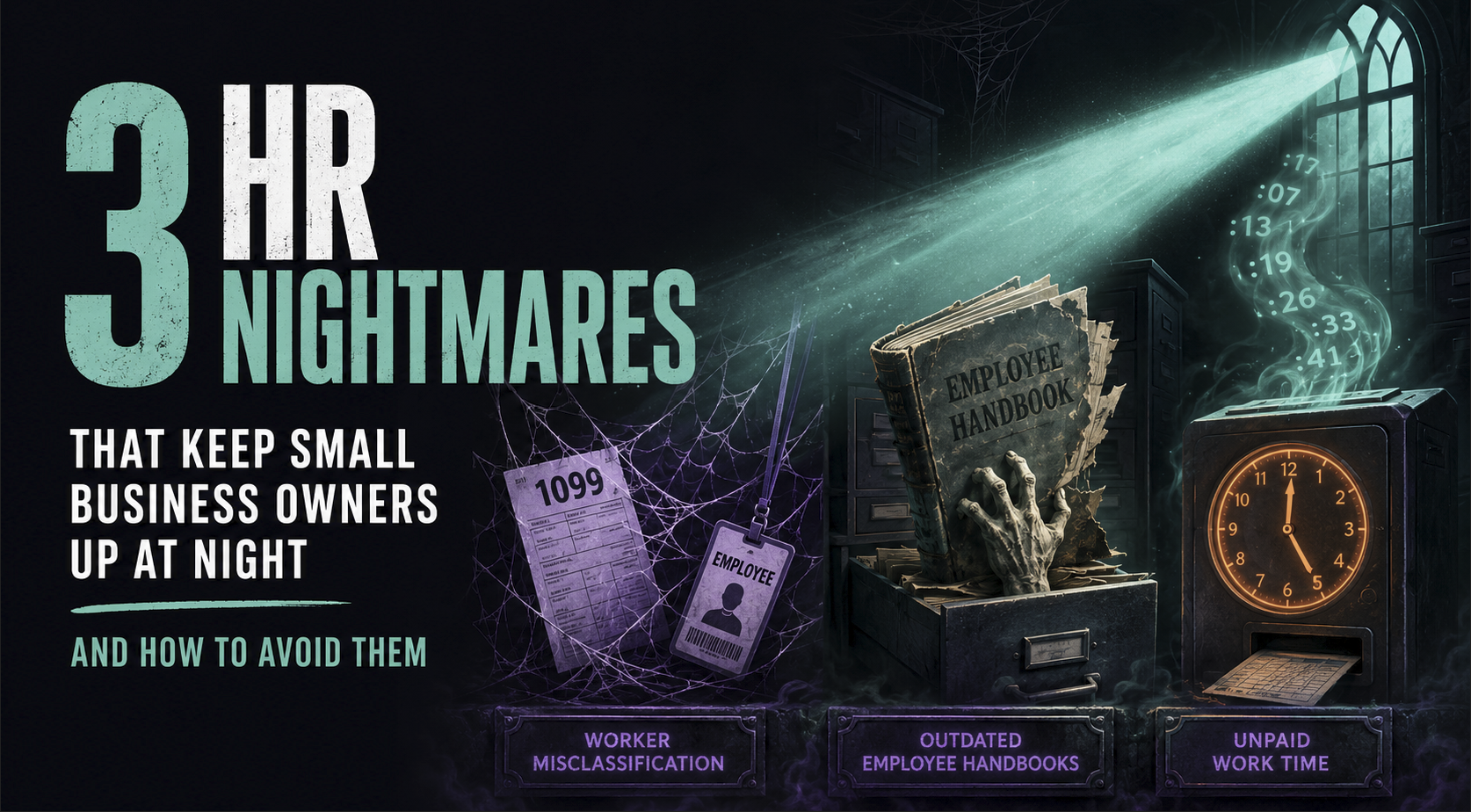
In my latest newsletter I’m shining a light on three of the biggest HR nightmares:
🕸️ The Tangled Web: Worker misclassification
🧟 The Zombie Handbook: Outdated and noncompliant policies
👻 Payroll Ghosts: Missing minutes and unpaid work
The good news? These nightmares are preventable.
It’s October, and while most people are worried about ghosts and goblins, small business owners are often haunted by something far scarier: compliance risks.
In the modern business landscape, the "move fast and break things" mentality has a dangerous side effect. When you break things in HR, they don't just stay broken; they come back to haunt you in the form of audits, lawsuits, and hefty fines. Whether it's a worker you thought was a contractor or a policy manual that hasn't been touched since 1998, these "HR Horror Stories" are more common than you think.
CraveHRO believes HR shouldn't be a house of horrors. We’re here to shine a light on the three biggest nightmares keeping business owners awake and show you how to banish them for good.
1. The Nightmare of Misclassification: "The Tangled Web"
You found a great worker. To save on taxes and paperwork, you decided to pay them as a 1099 independent contractor. Everyone is happy, until the Department of Labor (DOL) knocks on your door.
Translation? Simply calling someone a "contractor" doesn't make them one. The law looks at the economic reality of the relationship. If you control when, where, and how they work, the government likely considers them an employee.
What Changed?
The DOL has tightened the "multi-factor" test. They are looking closer than ever at whether a worker is truly in business for themselves or if they are economically dependent on your company.
Consequences
If the DOL or IRS decides your "contractors" are actually "employees," the bill is terrifying:
- Back Wages: You may owe unpaid overtime and minimum wage.
- Liquidated Damages: Often, the court will double the back wages as a penalty.
- Unpaid Taxes: You’ll be on the hook for the employer and employee share of FICA and FUTA taxes.
- State Fines: In states like California or New Jersey, misclassification fines can reach $5,000 to $25,000 per worker.
Think: Is that 1099 savings worth an even costlier nightmare?
2. The Zombie Handbook: "The Undead Policies"
Many small business owners have a "Zombie Handbook." It’s an old, dusty document inherited from a previous owner or downloaded from a generic template site in 2012. It sits on a shelf (or a forgotten Google Drive folder), technically "alive" but effectively dead because it no longer reflects current laws.
Translation? An outdated handbook is worse than no handbook. It gives employees a roadmap of your non-compliance. If your handbook says you don’t pay out vacation time upon termination, but your state law changed to require it last year, you’ve just handed a plaintiff’s attorney their star piece of evidence.
Why CraveHRO is talking about Handbooks
A modern handbook is a tool for building a culture where people love to work. It sets the stage for clear performance expectations. When your documents are up-to-date, you move from a defensive posture to a proactive one.
Compliant Disclosure Example:
"Employees have the right to discuss their wages, benefits, and working conditions with co-workers and third parties. Nothing in this handbook is intended to interfere with, restrain, or coerce employees in the exercise of their rights under Section 7 of the National Labor Relations Act."
3. Payroll Ghosts: "The Case of the Missing Minutes"
"Payroll Ghosts" aren't just about people who don't exist; they are the "ghost hours" your employees are working that you aren't paying for. Maybe it's a manager telling a team to "stay five minutes late to clean up" off the clock, or an "exempt" employee who doesn't actually meet the salary threshold for overtime exemption.
Translation? Wage theft is the #1 reason for employee relations issues. If you aren't tracking every minute for non-exempt staff, including travel time between jobs or "quick" after-hours emails, you are building a mountain of liability.
What Changed?
The federal salary threshold for "white-collar" exemptions (Executive, Administrative, Professional) has seen significant increases. If you have a salaried manager making less than the new threshold, they are now entitled to overtime.
Consequences
- Class Action Lawsuits: One unhappy employee usually leads to an audit of the entire team.
- Civil Penalties: The DOL can slap you with fines of $2,374 per violation for repeated or willful wage issues.
- Brand Damage: Word spreads fast. If you want to attract top talent, you can't have a reputation for "shaving hours."
Why You Need an Employee Relations Consultant
Navigating these haunts alone is exhausting. Small business owners are experts at their craft, but they shouldn't have to be experts in the Fair Labor Standards Act (FLSA). An employee relations consultant acts as your proactive shield, identifying these nightmares before they manifest.
At CraveHRO, we provide dedicated outsourced HR that focuses on people first. We don't just tell you what the law is; we help you implement it in a way that makes sense for your unique business.
CraveHRO’s Checklist: Banish the HR Nightmares
Check these boxes today to see if you're at risk:
☐ Audit Your 1099s: Do you have "contractors" who work 40 hours a week for only you? If yes, call us.
☐ Check the Date: When was the last time your Employee Handbook was updated by a professional? If it was more than 12 months ago, it’s likely a "Zombie."
☐ Verify Salary Thresholds: Check that every "Salary/Exempt" employee is making at least the current federal/state minimum for their role.
☐ Review Time-Tracking: Do you have a written policy that prohibits "off-the-clock" work?
☐ Update Postings: Ensure your labor law posters (the ones in the breakroom and/or digital folder) are the latest version.
Final Thought
Compliance isn't about fear; it's about foundation. When you clear out the "webs" in your HR infrastructure, you create space for your business to thrive. Don't let a "Zombie Handbook" or a "Payroll Ghost" take down the business you worked so hard to build.
Ready to wake up from the HR nightmare? Let's talk.