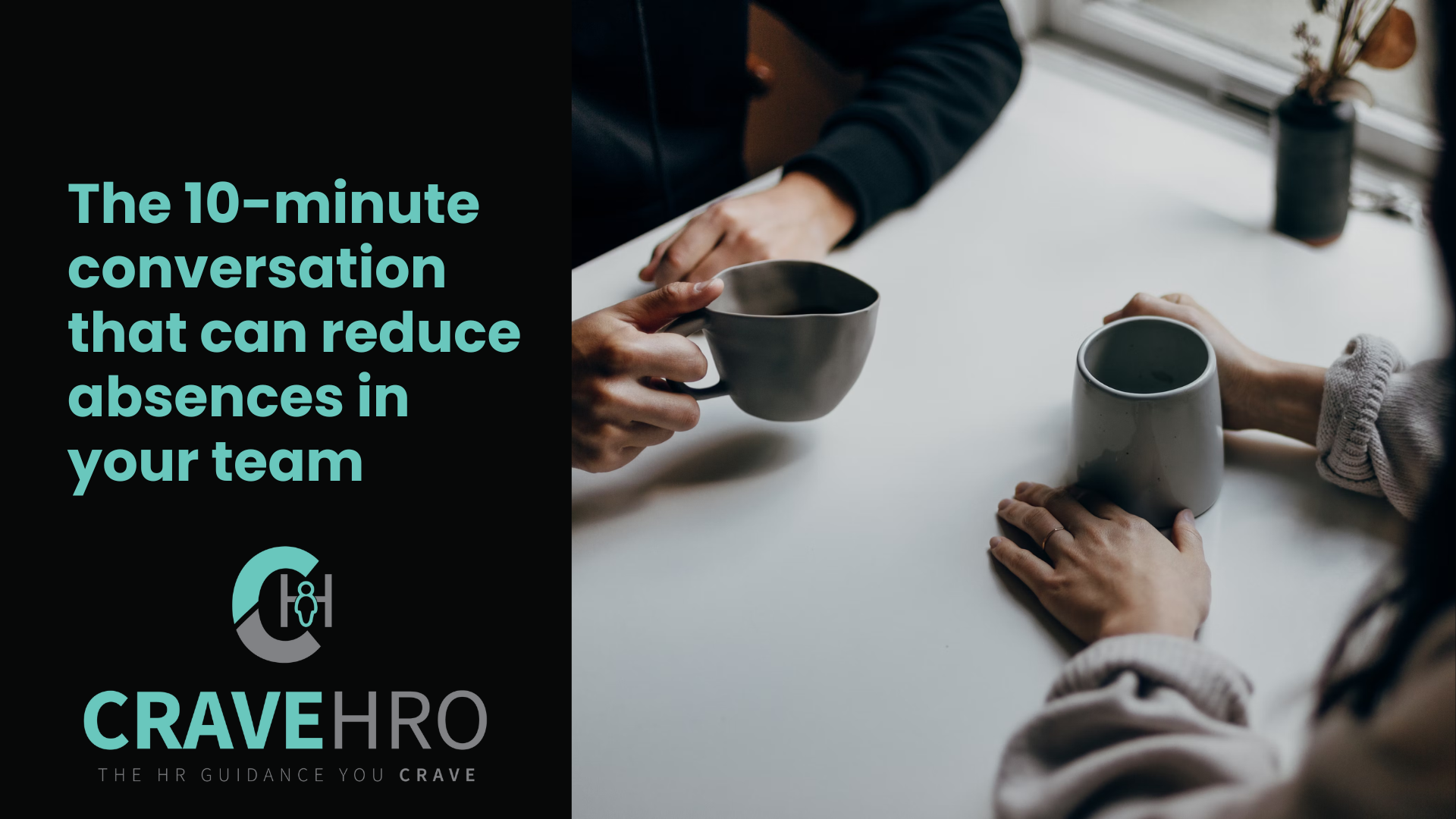
Absenteeism is rising across many workplaces. ๐Ÿ“ˆ


On average, US employees take around 3 to 4.5 sick days each year.


And you're probably feeling it in your business.


You can't control the winter flu season or someone's chronic health condition.


But there's a simple 10-minute conversation that most business owners skip completely.


This week I'm sharing how return-to-work conversations can help to reduce repeat absences and build trust across your whole team.


Read it below ๐Ÿ‘‡

Absenteeism is rising across many workplaces. On average, US employees take around 3 to 4.5 sick days each year.


You can't control the winter flu season or someone's chronic health condition. But you can control how you respond when people return to work.

๏ปฟ

Most business owners skip a simple 10-minute conversation that can help to reduce repeat absences.


What are return-to-work conversations?

When someone comes back after being out sick, have a brief, friendly conversation about how they're doing. That's it.

These conversations show your team that they matter as people. They help you to spot if there's something you need to know about. And they keep you informed rather than constantly surprised.

It's not about checking up on people or making them prove they were genuinely unwell. It's about making sure they have what they need to stay healthy at work.


Do:

Start with "How are you feeling now?"

Let them talk

Follow up with "Is there anything we should know about or can support you with?"

Keep it conversational


Don't:

Make it feel formal or defensive

Ask for medical details you don't need

Start with "We need to talk about your attendance record"

Turn it into an interrogation


The difference it makes:

Business owners who have these conversations see fewer repeat absences. People raise issues before they become bigger problems. Managers feel more in control, instead of constantly scrambling to cover shifts or workloads. The whole team notices when you handle absence with care. It builds trust across everyone, not just the person who was out. If you're not doing this already, start here. 10 minutes that can help to break the cycle of repeat absences and build a team that actually wants to be at work.
By Nicole Craveiro December 15, 2025
Growing your business feels amazing. More customers, more revenue, more people joining your team. But growth often exposes gaps in your HR foundations that you didn’t even know were there. Processes that worked fine with three employees can quickly cause problems when you have 10 or 15, especially when it comes to compliance and consistency. I’ve written about the legal risks that most often trip up growing businesses, and how to avoid them. Read it below ๐Ÿ‘‡
By Nicole Craveiro December 15, 2025
What’s coming for HR in 2026? We’ve broken down the key workplace trends for next year and what they mean for your business in our latest article. Read it here ๐Ÿ‘‡
By Nicole Craveiro December 8, 2025
Hands up if you're someone who tries to break the ice with a bit of small talk when interviewing someone... I know I am! ๐Ÿ™‹ It feels natural, but some casual questions can land you in serious trouble. I've written about the 5 things you shouldn't ask in an interview. Read it below ๐Ÿ‘‡
By Nicole Craveiro December 1, 2025
More adults are getting ADHD diagnoses than ever before. That means someone in your business might have ADHD right now, whether you know it or not. Understanding ADHD isn't just about being supportive, it's about unlocking potential you might not even realize exists in your team. I've written about what every small business owner needs to know: ๐Ÿง  What ADHD actually looks like in the workplace ๐Ÿ’ช The strengths you might be missing in your team ๐Ÿ›  Simple adjustments that can make a huge difference Read it here๐Ÿ‘‡
By Nicole Craveiro December 1, 2025
As 2025 wraps up, many small business owners are already looking ahead to the new year. This month’s newsletter covers the workplace issues that matter right now and the ones you’ll want to prepare for in 2026: ๐ŸŽฏ How to stop knowledge from walking out the door when key staff leave ๐ŸŽฏ December’s challenging people issues (and how to handle them) ๐ŸŽฏ News updates: disability inclusion, job hugging and Gen Z money worries โ“ And answers to your latest questions. Read the full update here.
By Nicole Craveiro November 24, 2025
Workplace problems in small businesses don't stay small for long. In small businesses, these problems affect more people and spread faster than in larger companies. The relaxed atmosphere that makes small businesses great can also be their downfall. Everyone knows each other's business, banter flows freely and boundaries get blurry. What starts as harmless jokes can quickly become something more serious: Someone gets excluded from conversations Comments about appearance, personal life or protected classes become the norm Criticism gets personal instead of professional Unwanted touching, inappropriate jokes or persistent requests for dates The worst part is that most people don't even realize they've crossed a line. Why it gets out of hand quickly I've seen business owners ignore the early signs because they don't want to make waves. "It's just their personality" they tell themselves. But here's what actually happens in small businesses: Productivity drops across the whole team (not just one department) Good people start looking elsewhere (and you can't afford to lose anyone) Customer service suffers because staff are distracted or unhappy The person causing the issue often has no idea there's even a problem You end up dealing with it personally instead of having HR handle it By the time you're dealing with a formal complaint or someone gives notice, it's too late. I've watched brilliant small businesses lose their best people because they didn't see the warning signs early enough. Getting clear on what's acceptable Write down 5-10 specific examples of how you want people to treat each other. Not vague statements about "being nice," but specific behaviors. Think about the behaviors you see in your best employees. What do they do that makes everyone else feel comfortable and valued? Speaking respectfully to everyone, whether they're colleagues, customers or vendors No gossip about other staff members No inappropriate comments about appearance, relationships or personal characteristics Raising concerns with you when direct conversation isn't appropriate Including everyone in conversations and social activities Keeping feedback professional and constructive Supporting each other during busy periods Actually following through Once you've got your list, you need to actually use it. Talk about these when someone new starts. Bring them up during quiet moments or when you're doing one-to-ones. When you see the behavior you want, acknowledge it. When something feels off, address it quickly and privately. Don't let things fester. You need to show what you want to see. If you want respectful communication, make sure you're communicating respectfully. Where to start This week, spend 10 minutes jotting down the behaviors that make your workplace function well. What do you want new hires to experience when they join? Then bring it up next time you get a chance to speak with your staff. Make it a conversation, not a lecture. Ask for their input. Frame it as protecting something valuable you've all built together. If you want help with creating behavior guidelines that actually work for your specific business, get in touch. Sometimes it helps to have someone from outside look at your workplace dynamics and help you to spot the blind spots.
By Nicole Craveiro November 18, 2025
When an important or “critical” employee leaves your business, the impact is immediate. 1: Knowledge and experience walks out of the door 2: It’s incredibly expensive to replace and train someone new 3: Your business slows down That’s why succession planning is so important. Even for companies with just 10 employees. "Succession planning" is simply knowing who could take on critical roles and making sure that they’re ready ahead of time. Our latest guide shows you how to identify critical roles (often not the most senior), spot who could step up and get them ready. Read it below.
By Nicole Craveiro November 1, 2025
November's HR update covers the changes affecting small businesses right now. It includes: โš–๏ธ How to stay ready for proposed changes to employment laws ๐Ÿ“„ Getting Form I-9 checks completed correctly ๐Ÿ“Š Why disability claims are up Plus, we answer your questions on social media policies, job titles and PTO carryover. Read it below ๐Ÿ‘‡
By Nicole Craveiro October 31, 2025
If you’re hiring someone new as a W-2 employee, then you must complete Form I-9 to verify their identity and work authorization. This applies to every role and every nationality. Get it wrong and you risk costly fines, possible criminal penalties for repeated violations and serious damage to your business and reputation. We’ve put together a step-by-step guide to I-9 compliance. Read it below.
By Nicole Craveiro October 27, 2025
Is a company handbook actually worth it? From an expert HR consultant's perspective, absolutely. And in our latest article, we share exactly why, and what it protects you from. ๏ปฟ