April 7, 2025

๏ปฟ

The U.S. Securities and Exchange Commission (SEC) and other financial regulators are investigating regulated entities regarding their employees’ use of personal messaging apps and other "off-channel" electronic platforms.


The SEC has raised concerns about unregulated off-channel communications, which pose risks around compliance, transparency and data security.


Employers who violate SEC rules may be subject to hefty fines.


Here’s why it matters for your business:

Data security risks


Messaging apps, like WhatsApp and Skype, often store sensitive information, including conversations, attachments and client details.


Compliance challenges


For businesses in regulated industries, unmonitored communication channels can lead to non-compliance with various laws and regulations.


Transparency and accountability


Off-channel communications can make it difficult to maintain an audit trail, complicating internal investigations or compliance checks.


Productivity concerns


Unregulated messaging apps might not only introduce risks but also distract employees.


Reputation management


Misusing personal messaging apps for work can blur the lines between personal and professional behavior, potentially leading to inappropriate or unprofessional interactions that harm your brand.


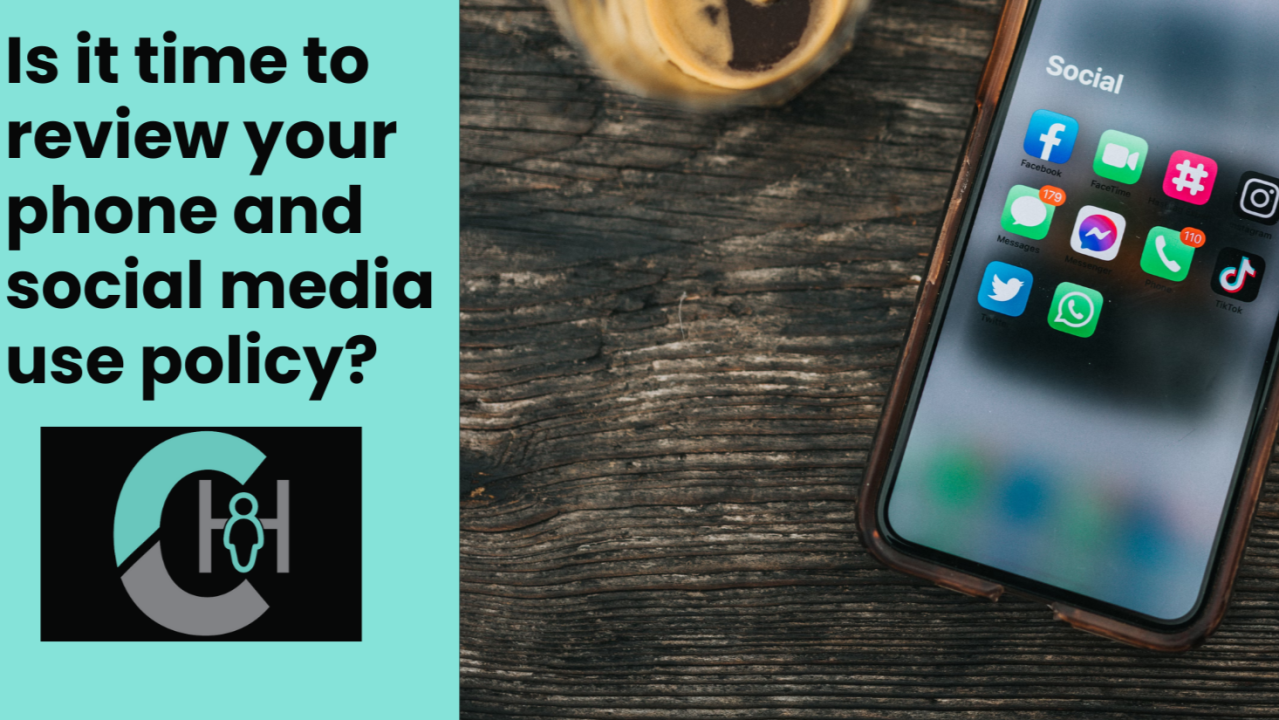
That's why you need a robust phone and social media policy

Your policy should cover:


Approved and prohibited tools


Define which communication platforms are acceptable for business use. For example, you might allow email, Teams or Slack for work conversations, but prohibit apps like WhatsApp or Skype.


Productivity and appropriate use


Outline expectations for personal phone use during work hours. Will you allow employees to check their phones during the entire workday or only during breaks? Are there any special considerations for hybrid or remote working scenarios?


Social media use


Clarify whether social media is permitted during work hours and specify acceptable use for roles that require it, such as managing company social media accounts. If your employees are posting on your company’s behalf, ensure that they understand copyright rules, fair use and what information is considered confidential and proprietary.


Risks and safety


Stricter rules should be included to prioritize safety for roles like drivers or those operating machinery. Conduct a risk assessment to identify where phone use might pose hazards. Be aware of related compliance requirements for commercial driver’s licenses (CDL) drivers.


Company-issued phones


If your business provides mobile devices, state what counts as acceptable use. Specify whether personal calls or app downloads are allowed and highlight security measures to protect company data.


Disciplinary measures


Clearly define what constitutes a policy breach and the consequences for employees who don’t comply. For clarity, refer to your Employee Discipline Policy or Procedures.


We can help you to clarify what your phone and social media policy should include to protect your business.

Get in touch with us for a confidential chat today.
By Nicole Craveiro February 16, 2026
In Denver, three businesses were fined over $8 million combined for getting their Form I-9 process wrong. ICE (Immigration and Customs Enforcement) found missing forms, late verifications and documents that didn’t meet requirements. The rules apply to every employer. Even a small business could face tens of thousands of dollars in fines for mistakes on just a few employees. In many cases, it comes down to one simple step that gets missed. I’ve written about what went wrong and how to get it right: ๐Ÿ“‹ The step that’s missed more often than you’d think โœ… What you actually need to do under US law ๐Ÿ›ก๏ธ How to set up I-9 checks that protect your business Read it below ๐Ÿ‘‡
By Nicole Craveiro February 9, 2026
What does proactive HR really mean for a small business? It’s about having simple systems in place before problems start. Our latest article shows how a proactive approach frees up your time, protects your business and lets you focus on growth. Read it here ๐Ÿ‘‡
By Nicole Craveiro February 4, 2026
When is the right time to suspend an employee? In our latest guide, we walk you through what suspension really means, when it is appropriate and how to handle it in a way that protects your business. Read it here ๐Ÿ‘‡
By Nicole Craveiro February 2, 2026
What happens when political or social debates spill into your workplace? You can’t control what people believe, but you can set clear expectations for how they act at work. The latest article shares practical steps for managing conflict over political and social views. Read it here ๐Ÿ‘‰
By Nicole Craveiro February 1, 2026
February’s HR update is here with practical guidance to help you to stay on top of people issues this month. โš–๏ธ What every employer needs to know before putting someone on leave ๐Ÿ“Š How to manage and reduce attendance issues in your business ๐Ÿ“… Smart February priorities to strengthen your team and avoid problems later โ“ Plus, your latest HR questions answered Read it below ๐Ÿ‘‡
By Nicole Craveiro January 26, 2026
What do you do if an employee raises a serious concern about wrongdoing in your business? That’s whistleblowing. It isn’t just another workplace complaint. It’s about reporting serious issues, like legal violations, fraud or safety risks, and employees are legally protected when they speak up. The latest article sets out a clear step-by-step process to follow if you receive a whistleblower complaint. Read it here ๐Ÿ‘‰
By Nicole Craveiro January 19, 2026
What do you do when a new hire isn’t working out during their introductory period? Handled well, an introductory period gives you a clear way to assess fit, support your employee and protect your business. Handled badly, you risk losing time, money and facing legal headaches. The latest article sets out a straightforward approach to managing introductory periods fairly and effectively. ๐Ÿ‘‰ Read it here.
By Nicole Craveiro January 12, 2026
What do you do when a client makes a complaint about one of your employees? It can be challenging to find the balance. Get it right and you’ll maintain the client relationship while treating your employee fairly. But, get it wrong, and you could risk losing the client and damaging team morale. The latest article tells you everything you need to know. Read it here ๐Ÿ‘‰
By Nicole Craveiro January 5, 2026
It’s a horrible feeling to suspect that someone in your team might be stealing from you. Missing inventory or cash that doesn’t add up could be signs of employee theft. Dealing with it early and fairly helps to protect both your business and your team. Read our step-by-step guide to handling this difficult situation in our latest article below. ๏ปฟ
By Nicole Craveiro January 3, 2026
Here’s your HR and employment checklist for 2026 ๐Ÿ‘‡ There’s a lot happening in the world of HR and employment regulations this year, so we’ve created our 2026 HR checklist to guide you on what to focus on. Read it below.